Skip to content
 EN
EN  DE
DE  العربية



Paperless Factory: What It Is, and How It Differs from a Paper-Based Operation
A paperless factory runs its shop-floor documentation, checks, work instructions and records digitally instead of on paper. The information is captured where the work happens and available in real time. A paper-based operation records on the floor, then re-types later, where errors, delays and lost forms creep in.
Why is a paperless factory important?
A paperless factory matters because paper records are captured on the floor and re-typed later, so the information is always a little out of date and errors slip in along the way. Capturing checks, work instructions, and records digitally at the source keeps the whole floor working from live, accurate data. It also makes records searchable, traceable, and impossible to lose in a binder.
What does a paperless factory replace?
It digitizes the paperwork that used to pile up on the floor:
- Work instructions and SOPs become digital work instructions on a device.
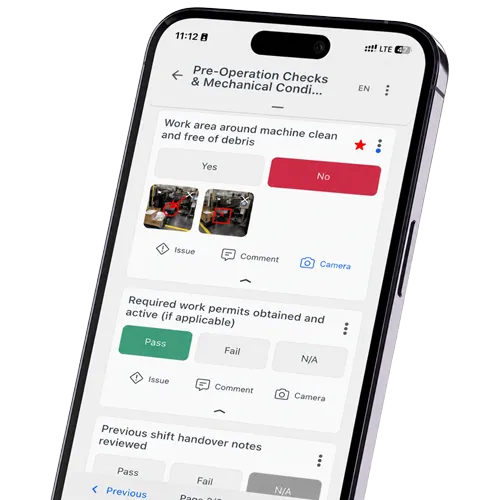
- Inspection and quality checks are captured with photos, on the spot.
- Maintenance and downtime logs are entered once, not transcribed.
- Sign-offs are time-stamped and traceable, not signatures on a sheet.
- Records are searchable and backed up, not stuffed in a binder.
How does it differ from a paper-based operation?
When and how the record is made. Paper is captured on the floor and re-entered later, so status is always a little out of date and errors slip in during transcription. A paperless factory captures the record once, at the source, and it’s live. It pairs with a manufacturing execution system to keep the whole floor in sync. Same work, no re-typing, no lost forms.
Paperless vs paper-based at a glance
Captured once and live versus recorded then re-typed.
| Aspect | Paperless Factory | Paper-Based |
|---|---|---|
| Record made | At the source, once | On paper, re-typed |
| Status | Real-time | As current as the last entry |
| Evidence | Photos, time-stamps | Signatures on sheets |
| Records | Searchable, backed up | In binders |
Related Terms
- Digital Work Instructions– a core paperless tool.
- Shopfloor Management– runs on live digital data.
- Industry 5.0– the wider direction of travel.
- Process Automation
Further Reading
- Connected-Worker-Platform – guide workers digitally
- Working Paperless in the Industry: Go Green
- Digitalizing Production Processes