Skip to content
 EN
EN  DE
DE  العربية



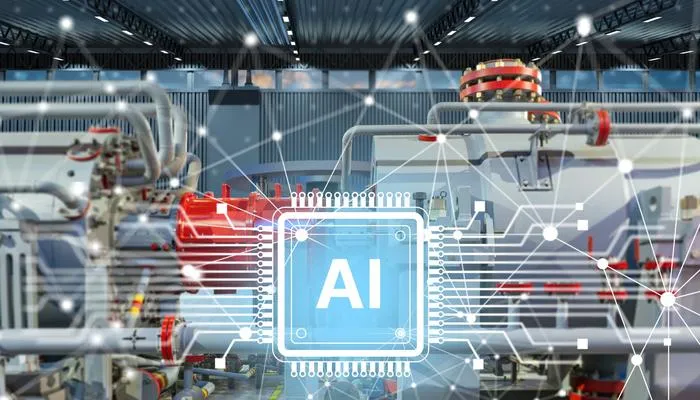
Summary: The digital transformation of manufacturing is not a short-term trend, but a profound change that affects manufacturing companies at every level. It is not limited to individual processes; workflows, supply chains, energy consumption, product development, and work organization are all equally subject to change. Technologies such as the Industrial Internet of Things (IIoT), digital twins, and networked sensors are increasingly transforming traditional factories into smart factories.
But digitalization means more than just the automation of production lines. It is about connecting systems, making data usable with analytics tools, and making strategic decisions based on this information. Today, production managers and IT leaders no longer have to ask themselves “if,” but rather “how” to successfully implement these changes.
What is digital transformation of manufacturing?
The digital transformation of manufacturing means more than just the use of new technologies. It involves the seamless integration of machines, processes, and data across departmental boundaries and extending to suppliers, partners, and customers.
The starting point is the machines and systems themselves. Via the Internet of Things (IoT), they provide real-time data that is analyzed using big data and artificial intelligence (AI). This makes manufacturing and production processes more responsive, allows maintenance intervals to be planned in advance, and enables bottlenecks to be identified in a timely manner.
Automation takes over repetitive tasks, freeing up capacity for more demanding activities. The technical term for this overall framework is Industry 4.0, also known internationally as Manufacturing 4.0.
Ready for the next level of production digitization?
flowdit provides you with data-driven real-time transparency and standardized processes for digitally connected production.
Technologies for Connected Manufacturing: The Building Blocks of Industry 4.0
In practice, the digitalization of manufacturing means that machines provide data, systems make decisions, and processes run more smoothly. The technologies to achieve this are available; the key is determining which ones work well together and where it makes sense to start.
Sensors and IoT
Sensors measure operational data such as temperature, pressure, vibration, or flow directly at the machine or system. This data is transmitted and analyzed in real time via IoT protocols (such as MQTT or OPC UA). This connectivity creates closed-loop control systems that enable machines to react autonomously to changes without human intervention.
Edge and Cloud Computing
For time-critical calculations, such as in process control or quality inspection, processing takes place directly at the machine. That is, locally; this is referred to as edge computing. Long-term evaluations, data archiving, and cross-site analyses, on the other hand, are performed in the cloud. Both levels complement each other, and in practice, latency requirements determine what is processed where.
Data Analysis and AI
Large amounts of data alone are of no use if they are not interpreted correctly. Only statistical models and machine learning algorithms can turn them into actionable insights: When will a component wear out? Where does scrap occur? This makes it possible, for example, to predict maintenance needs (predictive maintenance) or detect deviations in the production process at an early stage (anomaly detection).
Cyber-Physical Systems (CPS)
CPS connect physical machines with their digital representations. The best-known example is the digital twin. This is a virtual representation of a plant that receives real-time data from production and enables simulations and diagnostics without stopping the actual plant.
Robotics and Collaboration
Industrial robots take on repetitive tasks and are capable of performing complex activities autonomously. Collaborative robots (cobots) work directly alongside humans and react to their movements. This is particularly relevant where varying batch sizes and high flexibility are required, as full automation is often uneconomical.
At the same time, Robotic Process Automation (RPA) complements these physical systems by automating repetitive digital tasks such as data transfer, reporting, and workflow coordination, ensuring that both shop floor operations and back-office processes run seamlessly together.
Additive Manufacturing
3D printing has become established for prototypes, replacement parts, and small production runs with complex geometries. Advantage: There are no tooling-related setup times, and products can be manufactured directly from CAD data. For metallic components (such as in Laser Powder Bed Fusion), the process is now suitable for series production.
AR in Maintenance
Augmented Reality (AR) displays context-specific information (such as circuit diagrams, error codes, and assembly steps) directly in technicians’ field of view. This reduces setup times and error rates, especially for complex or rarely maintained systems.
Blockchain in the Supply Chain
Blockchain is a technology in which transactions are recorded in interconnected blocks. It creates an immutable, decentralized ledger for material movements and quality records. This is particularly relevant in industries where product traceability is required by law, such as the pharmaceutical or food industries.
The Impact of Digitalization of Production
Digitizing manufacturing is worthwhile for economic, technical, and strategic reasons. In an industrial context, it’s about achieving measurable gains in efficiency, quality, and flexibility across the entire value chain.

Reduced downtime through predictive maintenance

Real-time transparency & traceability

Higher overall equipment effectiveness (OEE)

Inline quality inspections & automated defect detection

Seamless data flow from shop floor to ERP

Real-time KPIs make bottlenecks and deviations immediately visible

Faster changeovers through digital work instructions

Batch size 1 capability through connected, modular systems

Compliance and documentation requirements can be automated

IoT landscapes reduce engineering effort for new lines or sites

Shorter time-to-market

Lower energy consumption through data-driven process optimization
From Connectivity to AI-Driven Digitalization of Production
Anyone looking to advance the digital transformation of their production must first take an honest look at the current state of affairs: Where does the company stand today? Which systems are already connected, and which processes are still analog? The answers to these questions will determine the next step...
1. Digitization of Production Data
What happens here?
The first step in production digitization is connecting machines to a network. Sensors and IoT devices are attached to the machines to continuously collect real-time data on their condition and performance. This data forms the foundation for all subsequent steps in the digitization process. The transition from manual documentation to digital formats, such as digital checklists, also takes place here.
Why is this important?
Without measurement data, control remains blind. Only through comprehensive sensor technology is the foundation laid for all subsequent steps: from plant monitoring to predictive maintenance. Instead of reacting to plant failures, the system detects wear and anomalies before damage occurs. This increases plant availability and reduces unplanned downtime costs.

2. Integrating Automation & Robotics
What’s happening here?
Repetitive, rule-based tasks in manufacturing are gradually being handed over to machines (ranging from simple gripping and joining processes to self-managing manufacturing cells). Collaborative robots (cobots) work right alongside employees, taking over tasks that are ergonomically taxing or prone to errors.
Why is this important?
Automation not only increases throughput; it also stabilizes quality. Sources of human error in series production decrease, cycle times become more consistent, and processes can be scaled more efficiently.

3. System Integration and Interconnectivity
What happens here?
Various production and IT systems—such as ERP (Enterprise Resource Planning), MES (Manufacturing Execution System), and IoT (Internet of Things) platforms—are interconnected to ensure seamless communication and continuous data exchange between machines and the IT infrastructure. Data no longer flows in silos but across systems: A production order from the ERP automatically triggers control commands in the MES, while machine data in turn updates inventory levels and delivery schedules in real time.
Why is this important?
Data silos cost time and lead to errors. Integrating ordering, manufacturing, logistics, and maintenance into a seamless network drastically reduces response times; for example, when a delivery bottleneck becomes immediately visible in production planning before the line stops. This integration makes the company controllable rather than merely reportable.

4. Big Data & Advanced Analytics
What happens here?
As soon as data is collected, large volumes of information are generated. This data must be structured and managed efficiently so it can be used for the next steps in digitalization. Big data sets are evaluated using specialized analytical tools to identify patterns and trends by analyzing historical and current production data. Which parameter combinations lead to scrap? Where do bottlenecks occur in the material flow? Which shifts produce with the highest efficiency? Statistical evaluations, time series analyses, and visual dashboards reveal hidden correlations.
Why is this important?
Instead of reacting to individual events, production managers recognize systematic patterns in production processes and can intervene in a targeted manner. A two-percentage-point reduction in the scrap rate, optimized machine utilization, or the identification of the most costly maintenance interval: these are concrete, directly monetarily effective results from data analysis.

5. Digital Twin & Simulation
What happens here?
The digital twin is a virtual replica of the physical production facilities and is continuously synchronized with real-time sensor data. Simulations enable testing and optimization without interfering with the actual production process. Scenarios can be run through a digital twin: What happens if a unit fails? How does the line behave with a changed product mix? Which parameter setting achieves the highest throughput?
Why is this important?
Changes in real-world production cost time and money and carry risks. The digital twin makes the production process testable without stopping a single machine. New equipment can be virtually commissioned before it is installed. Optimizations are first simulated, then implemented: with significantly greater accuracy and fewer startup losses. This saves time and costs and increases safety.

6. Implementation of AI-driven processes
What happens here?
Here, artificial intelligence (AI) is used to analyze large amounts of data and make decisions that optimize production. Machine learning is used for predictive maintenance, quality-based process controls, and adaptive process control. A deeper look into AI in manufacturing shows how these technologies are used to optimize production processes.
Why is this important?
AI enables the automation and autonomous optimization of production processes, significantly increasing efficiency and flexibility in production. It also contributes to proactive maintenance to prevent downtime and improve product quality.

Indirect Effects of Digitalization of Production
The digitalization of production not only creates competitive advantages but also brings with it side effects that should be taken into account:
Increased System Complexity
The integration of IoT, cloud solutions, and automation technologies leads to greater complexity in production systems. This can create challenges in maintaining and managing these systems. Errors in networked systems are harder to locate and resolve. Data silo issues also arise when different systems fail to communicate effectively with one another.
IT Security
As production becomes increasingly interconnected, the attack surface for cyberattacks expands. Networked systems are more vulnerable to hackers and sabotage. System failures are also a risk, as total interconnectivity makes operations more susceptible to cascading failures.
Data Security and Privacy
The increasing collection and interconnection of data in production heightens the risk of data breaches. Companies must ensure that collected data is stored and processed securely to prevent potential attacks. In particular, large-scale data collection on employees, processes, and customers poses a data protection risk.
New Business Models
Connected manufacturing opens up new data-driven business models that go beyond traditional product-based business. These range from service-based revenue models to data-driven product development. These changes create new sources of revenue and influence the way products are developed and brought to market.
Job Shifts
Process automation can lead to the elimination of some jobs. At the same time, however, new specialized jobs are emerging that require technical knowledge and skills in using digital tools. Companies must offer appropriate training and retraining programs to support this transition.
Dependence on technology
A heavy reliance on digital systems can become problematic in the event of system failures or unforeseen technical issues. Reliable backup and emergency management are therefore essential to ensure business continuity.
Changing corporate culture
New technologies only realize their full potential when organizational and leadership cultures adapt accordingly. Acceptance, clear responsibilities, and an open culture of error are prerequisites for the successful implementation of digital solutions.
Technological Change in the Supply Chain
Digital integration does not stop at the factory gate. Digitalization is transforming the entire supply chain as companies exchange more data in real time and connect with one another. This creates new challenges in terms of integration and cooperation among partners.
Environmental impacts
• Increased energy consumption: Data centers, sensors, and AI systems consume a lot of electricity.
• Electronic waste: Short innovation cycles lead to more hardware waste.
The Human Factor: Risk, Resource, Competitive Advantage
The production floor is changing not only because of technological progress. It is changing because people must make different decisions: faster, data-driven, and across systems. This makes the manufacturing communication system a human as well as a technical issue.
Those who only involve employees in implementation projects once systems are already up and running run the risk that new processes will not be established permanently.
Cobots and assistive systems are increasingly taking over repetitive tasks, while activities that require context, judgment, and experiential knowledge continue to be performed by humans.
In addition, software-supported workflows and digital work instructions have been proven to reduce training times and lower error rates. This does not replace training, but it does ease the burden on employees.
Companies that invest in digital infrastructure today not only secure efficiency gains but also improve their position in the competition for talent. The next generation of employees, the so-called digital natives, expect modern work environments as a matter of course.
Where Digitalization of Production Creates Value and Where It Doesn’t
Digitalization opens up significant potential for manufacturing, while also presenting companies with challenges that must be realistically assessed.
Opportunities of Digitalization
✔️ Increased efficiency: Automation and connected systems can accelerate production processes. Manual steps are reduced, saving time and costs.
✔️ Increased machine and equipment availability (zero downtime): Predictive maintenance and networked systems enable early detection of failures and significantly reduce unplanned downtime. Overall equipment effectiveness (OEE) increases.
✔️ End-to-end IT/OT integration: The seamless flow of information along the value chain provides production, quality, and machine data in real time. This forms the basis for informed, data-driven decisions at all levels.
✔️ Manufacturing flexibility: Technologies such as digital twins, 3D printing, and modular production lines enable production down to batch size 1. This makes it possible to adapt more quickly to market demands without significant setup costs.
✔️ Increase productivity: Automation and precise control reduce scrap and increase production speed.
✔️ Quality assurance: Continuous process monitoring, automated inspections, and real-time data analysis have been proven to reduce error rates. Deviations are detected before they affect the entire batch.
✔️ New business models: Digitalization opens the door to business models such as on-demand manufacturing and customized products. This strengthens market position and improves customer loyalty in the long term.
✔️ Access to new markets: Digital manufacturing makes companies more competitive and enables them to efficiently serve global markets.
✔️ Reduction in production costs: Automation and optimized maintenance lower production costs as well as expenses for maintenance and commissioning.
Barriers to Digitalization
⚠️ High Initial Investments: The adoption of digital manufacturing technologies requires significant investments in hardware, software, licenses, and training. This represents a significant barrier to entry, particularly for SMEs.
⚠️ System integration and technical complexity: Established IT and OT landscapes are often difficult to integrate with new digital systems. Migrating legacy systems and harmonizing heterogeneous infrastructures ties up significant resources.
⚠️ Lack of skilled personnel: There is a shortage of qualified specialists for the implementation and operation of digital manufacturing processes. Companies are therefore increasingly investing in continuing education and workforce development.
⚠️ Regulatory requirements: Data protection regulations such as the GDPR, industry-specific standards, and certification requirements increase the effort required to implement digital systems. In regulated industries such as automotive or medical technology, these requirements carry particular weight.
⚠️ Internal Resistance: Digitalization projects often face skepticism among employees when job losses are feared. Structured change management and transparent communication are prerequisites for a successful transformation.
How to Determine the Digital Maturity Level of Your Production
No company transforms its production overnight. The transformation takes place in clearly defined stages, each with its own prerequisites and each serving as a foundation for the next. Knowing your own maturity level allows you to invest strategically rather than blindly. A proof of concept (PoC) can validate the next step before scaling it across production.
Maturity Levels of the Industry 4.0 Model:
Stage 1: Initial Automation
Individual, repetitive processes are automated; the first step away from purely manual work.
Systems still operate largely in isolation, without exchanging data with one another.
Stage 2: Networked Manufacturing
Systems and machines communicate with one another, and data flows through the entire production chain for the first time. Sensors continuously record production parameters, making processes transparent for the first time.
Stage 3: Intelligent Manufacturing
AI and machine learning analyze the collected data and actively optimize processes. Deviations are detected and corrected in real time before they become problems.
Stage 4: Autonomous Manufacturing
Production processes control themselves: Human intervention becomes the exception.
Systems make decisions independently based on continuously learning models.

Digitizing Production – The Next Steps for Industry 2026
The following seven steps show how manufacturing companies can approach the digitization of their production in a realistic way and achieve measurable results.
-

1. Establish a Digital Foundation
Before you begin the digital transformation, you should thoroughly analyze your production processes. Which steps are inefficient, and where are the bottlenecks? This analysis forms the basis for strategically optimizing both digital tools and internal workflows. Conduct a technology assessment to determine whether your IT infrastructure, equipment, and machinery are suitable for digital transformation or in need of modernization. -
2. Determine the Maturity Model
A maturity assessment makes your company’s digital status measurable and, therefore, manageable. It reveals the actual level of maturity of individual production areas, as design, manufacturing, and maintenance rarely develop at the same pace. -
3. Selecting a Digital Transformation Partner
In-house expertise is rarely sufficient to fully assess the scope of a digital transformation initiative. In addition to references, evaluate the partner’s methodology, technical expertise, and whether they truly understand your industry. A partner who understands your processes and communicates clearly is essential. -
4. Develop a Digital Transformation Strategy
The digital transformation strategy is developed based on the analysis and the current level of maturity, featuring a clear roadmap, measurable KPIs, and defined milestones. The key difference from a simple technology plan is that siloed solutions are consistently avoided. Instead, the focus is on the seamless integration of production, ERP, and quality data. -
5. Involve employees from the very beginning
Technology often fails if employees aren’t on board. Change management is therefore not a soft factor, but a key driver of success. Involve your team early on, communicate specific benefits for their day-to-day work, and offer regular training. If you wait to inform your employees until the software is already up and running, you’ve already fallen behind. -
6. Involve external partners and consultants
In addition to the digital transformation partner, external consultants and stakeholders with expertise in specific areas should also be involved. These experts can provide valuable insights, share best practices, and develop solutions that will help the company move forward in the long term. -
7. Agile and iterative: Reaching your goal in small steps
Start with pilot projects that can be implemented quickly and deliver immediate results. These quick wins provide initial measurable successes (such as reduced setup times or less waste) and give your employees and stakeholders confidence that digital transformation actually works.
Conclusion
Industry 4.0 requires consistent action and a clear strategic direction. Manufacturing companies that fail to take proactive steps will fall behind technologically and lose their market position.
Practical experience shows that the biggest hurdles rarely lie in the technology itself. They lie in the lack of data transparency on the shop floor, in legacy system landscapes lacking interoperability, and in investment decisions without a clear phased approach. Those who invest directly in AI or autonomous systems without first consolidating the preceding maturity levels are building on a foundation that cannot bear the load.
The maturity model helps to realistically assess the current status. Where do we actually stand? Only from this answer can investment priorities be derived: whether that is the networking of isolated machines, real-time monitoring, or predictive analytics. What matters is not so much the speed of the transformation, but its consistency. Companies that proceed step by step fail less often, because processes, people, and structures grow along with the transformation.
flowdit: Your Partner for Building Better Processes
Machines generate data, employees follow instructions, orders move through production—but everything runs on separate systems. That’s exactly where errors and delays occur, and where control lags behind reality.
Does this sound familiar?
Machine data exists, but no one sees it at the right time and in the right place. Inspection results are not traceable.
flowdit connects these levels into a seamless system:
✔️ IoT sensor integration: Machine data flows directly into workflows and inspection processes
✔️ Maintenance & repairs: Inspections, reports, and actions are fully documented
✔️ Shop floor management: Work steps, feedback, and escalations are managed through a single interface
✔️ Order Planning & Control: Assignment, progress, and status in real time
✔️ Process Data Collection: Structured, traceable, and audit-ready
✔️ Performance Transparency: Key metrics at the shift, team, and plant levels
➤ Get to know flowdit in a trial/free demo and see exactly what changes in your manufacturing operations within the first 90 days
FAQ | Digitalization of Production
What is meant by digitalization in manufacturing, and how does it differ from Industry 4.0?
Digitalization in manufacturing involves the integration of digital technologies to make production processes more efficient, transparent, and flexible.
Industry 4.0 takes this a step further and describes fully automated, networked production in which machines, systems, and products communicate with one another and can optimize processes autonomously.
What comes after Industry 4.0?
The term Industry 5.0 describes the next stage of development—characterized by three guiding principles:
- Human-Centric: People and machines work collaboratively, not competitively.
- Sustainable: Resource efficiency and the circular economy become core requirements.
- Resilient: Production systems are designed to withstand crises and supply chain disruptions.
What distinguishes an AI assistant from a simple AI tool?
Companies in the manufacturing industry often use AI as a text generator or for code assistance. However, this support is only sporadic and not deeply integrated into processes. The true added value only becomes apparent when AI is closely integrated into processes as an assistance system and draws on company-specific knowledge. Such a system can provide context-specific expertise from internal documents and guidelines and support service processes such as maintenance or IT support.
How do MES, ERP, PLM, and other systems differ in terms of their benefits for production?
MES, ERP, and PLM perform different functions, but in practice they are closely interlinked.
An MES controls and monitors the ongoing production process in real time: machine utilization, order progress, and quality data.
The ERP system operates at a higher level. It coordinates resources, finances, procurement, and workforce planning across the entire company.
PLM, on the other hand, tracks the product from design through to end-of-life and consolidates all development-related data and revisions.
What tools can help predict maintenance needs in production?
There are various tools that help predict maintenance needs, such as Uptake or IBM Maximo, which utilize IoT sensors and data analysis. flowdit also offers a powerful solution for predictive maintenance by monitoring machine data in real time and identifying anomalies early on.
Which technologies support proactive quality control?
By using sensors, AI, and machine learning, production data can be analyzed in real time and deviations detected early on. Systems like flowdit support proactive quality control by identifying the causes of defects in real time and triggering immediate corrective actions.
How can existing machines without digital interfaces be made “production-ready and connected”?
Existing machines can be digitized and connected to the internet through retrofits such as IoT sensors, gateways, and edge computing. These devices collect and transmit data, which can then be integrated into existing systems to enable real-time monitoring and remote control.
How can final inspection in manufacturing be efficiently digitized?
With flowdit, companies can perform guided, real-time digital final inspections: directly at the inspection station, even offline. Defects are immediately recorded, documented, and traced.
When combined with an MES (Manufacturing Execution System), this creates a fully integrated quality process: the mobile, guided final inspection software solution ensures that inspection processes are carried out precisely and consistently.
Image Credits
© Grispb - Adobe Stock
© TimosBlickfang - Adobe Stock
© Alfan Subekti - Adobe Stock
© denny - Adobe Stock
© Suriyo - Adobe Stock
© Sona - Adobe Stock
© Air Stock - Adobe Stock