Skip to content
 EN
EN  DE
DE  العربية



HACCP: What It Is, the Seven Principles and How it Differs from GMP
Why is HACCP important?
HACCP is important because it prevents food-safety hazards from reaching the consumer, instead of catching problems after the fact. Controlling hazards at defined critical control points protects public health, supports regulatory compliance, and lowers the risk of costly recalls. For most food manufacturers it is a legal or customer requirement, not an optional extra.
What are the seven principles of HACCP?
- Conduct a hazard analysis.
- Identify the critical control points (CCPs)
- Set critical limits for each CCP.
- Monitor the CCPs, and set corrective actions when a limit is breached.
- Verify the system works, and keep records that prove it.
How does HACCP differ from GMP?
Foundation versus targeted control. Good manufacturing practice is the baseline hygiene and process discipline every food operation needs. HACCP sits on that base and targets specific hazards at specific control points. GMP keeps the whole environment safe; HACCP guards the exact steps where a hazard could get through. It’s a quality assurance approach, close cousin to process safety thinking, and often feeds a recipe management system.
HACCP vs GMP at a glance
| Aspect | HACCP | GMP |
|---|---|---|
| What it is | Targeted hazard control | Baseline hygiene and practice |
| Focus | Critical control points | The whole operation |
| Nature | Preventive, specific | Foundational, general |
| Relationship | Sits on top of GMP | The foundation |
Free HACCP Plan Worksheet
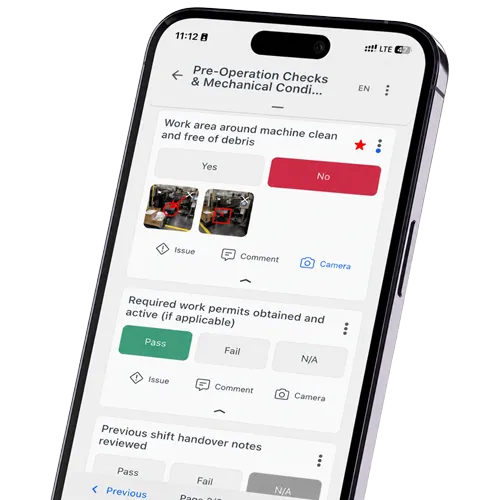
It walks the hazard analysis, critical control points, limits, monitoring and corrective actions on one structured plan, so control is documented not assumed. Download the checklist (PDF). You can also complete the checklist digitally in flowdit on your phone, tablet or PC.