Skip to content
 EN
EN  DE
DE  العربية



Total Productive Maintenance (TPM): What It Is, the Pillars, and How It Differs from Traditional Maintenance
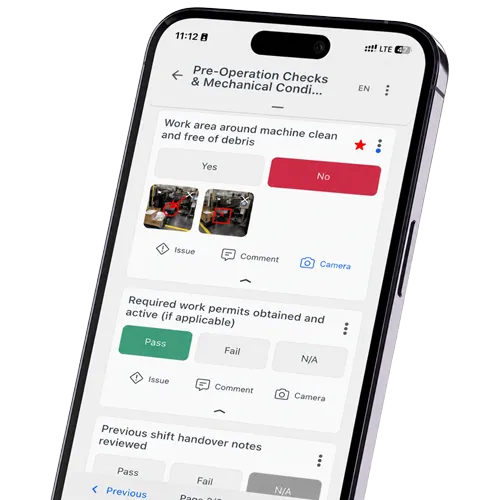
Total productive maintenance, or TPM, makes equipment reliability everyone’s job, not just the maintenance team’s. Operators take on basic care so specialists can focus on the hard problems. Traditional maintenance draws a hard line, operators run, maintenance fixes. TPM erases that line to chase zero breakdowns.
Why is total productive maintenance important?
TPM matters because unplanned breakdowns quietly drain output, quality and safety, and no maintenance team can catch every early warning sign on its own. When operators share responsibility for basic equipment care, small problems get spotted and fixed before they turn into stoppages. The result is higher equipment reliability and better overall equipment effectiveness (OEE) without adding headcount.
What are the pillars of TPM?
TPM is usually built on eight pillars, resting on a 5S base:
- Autonomous maintenance, operators caring for their own equipment, covered under autonomous maintenance.
- Planned maintenance, scheduled work by the maintenance team.
- Quality maintenance, designing out the defects equipment causes.
- Focused improvement, small teams attacking specific losses.
- Plus early equipment management, training, safety, and TPM in the office.
How does TPM differ from traditional maintenance?
Who owns reliability. Traditional maintenance splits roles: operators produce, the maintenance team repairs. TPM shares ownership, so operators do clean, inspect, lubricate and catch problems early, freeing specialists for the deep work. The goal is measured in OEE: fewer breakdowns, faster running, better quality, all at once.
TPM vs traditional maintenance at a glance
Shared ownership versus a hard line.
| Aspect | TPM | Traditional Maintenance |
|---|---|---|
| Owns reliability | Everyone | The maintenance team |
| Operators | Do basic care | Run only |
| Goal | Zero breakdowns | Fix when it fails |
| Measured by | OEE | Repair backlog |
Related Terms
- Autonomous Maintenance– TPM’s first pillar.
- Preventive Maintenance (PM)– the planned-maintenance pillar.
- Kaizen– the focused-improvement engine.