Skip to content
 EN
EN  DE
DE  العربية



Clean, Inspect, Lubricate (CIL): What It Is, and How It Differs from Maintenance-Led PM
Clean, inspect, lubricate, or CIL, is a basic maintenance routine done by operators on their own equipment: keep it clean, look for early signs of trouble while cleaning, and keep it lubricated. It’s the foundation of autonomous maintenance. Where preventive maintenance is maintenance-led and scheduled, CIL is operator-led and daily.
Why is clean, inspect, lubricate important?
Clean, inspect, lubricate matters because the operator is closest to the machine and spots trouble long before a scheduled check would. Cleaning is really inspection in disguise: it surfaces the leaks, cracks, and loose parts that grime hides, while regular lubrication prevents a large share of failures outright. Catching small problems early is what keeps them from becoming downtime, and it is the foundation of autonomous maintenance.
Why do operators do CIL?
Cleaning is really inspection in disguise, and the operator is closest to the machine:
- Cleaning surfaces the leaks, cracks and loose parts you’d never see under grime.
- The operator notices small changes long before a scheduled check would.
- Lubrication done right and often prevents a big share of failures.
- It builds ownership: the person who runs it also cares for it.
- Small problems get caught while they’re still small.
How does CIL differ from maintenance-led PM?
Who does it, and how often. CIL is done by operator rounds, daily, on basic care. Preventive maintenance is done by the maintenance team on a schedule, on the deeper work operators can’t do. CIL is the first line; PM is the specialist backup. Together they cut downtime far more than either alone.
CIL vs maintenance-led PM at a glance
Operator basics versus scheduled specialist work.
| Aspect | Clean, Inspect, Lubricate | Preventive Maintenance |
|---|---|---|
| Done by | Operators | Maintenance team |
| Frequency | Daily | On a schedule |
| Scope | Basic care | Deeper servicing |
| Role | First line | Specialist backup |
Free CIL Checklist
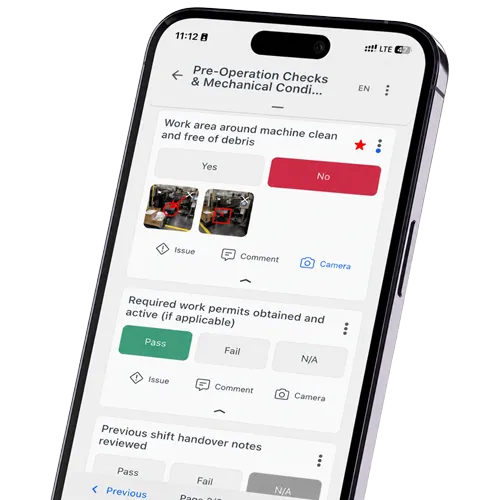
It gives operators a per-shift clean, inspect and lubricate routine with a place to flag anything abnormal, so small problems get caught early. Download the checklist (PDF). You can also complete the checklist digitally in flowdit on your phone, tablet or PC.
Related Terms
- Preventive Maintenance (PM)– the maintenance-led layer.
- Condition Monitoring System– the sensor-based next step.
- Autonomous Maintenance
Further Reading
- Operator Rounds Software – running CIL routines on a mobile checklist
- Total Productive Maintenance – the framework CIL belongs to
- 5S Audit Checklist – checking that routines are actually followed