Skip to content
 EN
EN  DE
DE  العربية



Kaizen: What It Is, How an Event Works, and Kaizen vs Kaikaku
Kaizen is Japanese for continuous improvement: many small changes made by the people who do the work, day after day. It gets contrasted with kaikaku, which is radical, top-down change. Kaizen is the steady drip that compounds; kaikaku is the occasional leap.
Why is kaizen important?
Kaizen matters because steady, small improvements made by the people who do the work add up to large gains over time, without the disruption of a big overhaul. It builds a culture where everyone looks for waste and fixes it, which is the engine behind lean production and the continuous improvement process. That habit is often what separates plants that keep getting better from those that plateau.
How does a kaizen event work?
A focused kaizen event, sometimes a week long, runs a tight loop:
- Pick a narrow problem and a clear target.
- Go and see the actual process, with the people who run it.
- Find the root cause, not the first symptom, often with root cause analysis.
- Try changes fast, measure, keep what works.
- Standardize the win, then set the next target.
How does kaizen differ from kaikaku?
Pace and scale. Kaizen is continuous and incremental, driven bottom-up by the team, and it feeds the continuous improvement process. Kaikaku is radical and infrequent, a big redesign driven from the top. Kaizen keeps the gains coming; kaikaku resets the baseline. Most plants need both, but live on kaizen day to day.
Kaizen vs kaikaku at a glance
The steady drip versus the big leap.
| Aspect | Kaizen | Kaikaku |
|---|---|---|
| Scale | Small, incremental | Large, radical |
| Pace | Continuous | Occasional |
| Driven by | The team, bottom-up | Leadership, top-down |
| Effect | Compounding gains | A reset baseline |
Free Kaizen A3 Improvement Sheet
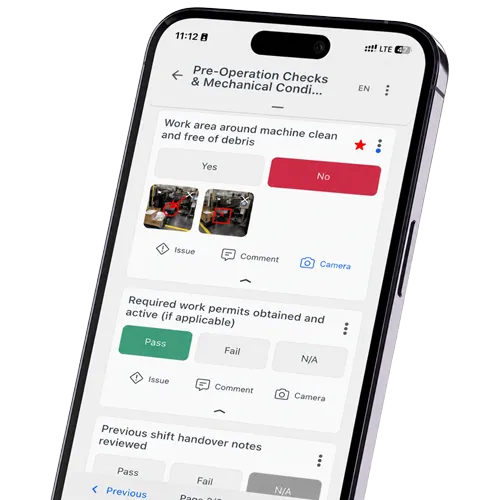
It walks a single improvement from problem and current state to target, actions and follow-up on one page, so a kaizen doesn’t fizzle after the event. Download the checklist (PDF). You can also complete the checklist digitally in flowdit on your phone, tablet or PC.
Related Terms
- Root Cause Analysis – finds what to improve.
- Lean Production – the system kaizen powers.
- 5S Method – a common first kaizen.
- Lean Management
- Operational Excellence