Skip to content
 EN
EN  DE
DE  العربية



Autonomous Maintenance: What It Is, and How It Differs from Preventive Maintenance
Autonomous maintenance hands basic equipment care to the operators who run the machines: cleaning, inspecting, lubricating and spotting trouble early. It’s the first pillar of TPM. Preventive maintenance is scheduled work done by the maintenance team. One builds operator ownership; the other brings specialist depth.
Why is autonomous maintenance important?
Autonomous maintenance matters because most equipment failures start as small issues, a bit of dirt, a loose bolt, a minor leak, that only the operator at the machine is placed to catch early. Leave that basic care to a stretched maintenance team and those signs are missed until they become a breakdown. Simple clean, inspect and lubricate routines keep minor faults from turning into unplanned downtime.
What do operators do in autonomous maintenance?
It builds up in steps, from basic cleaning to real ownership:
- Clean, inspect and lubricate, the clean, inspect, lubricate routine that starts it all.
- Tackle the sources of contamination, so cleaning gets easier over time.
- Set standards for cleaning, inspection and lubrication.
- Learn to spot early signs of trouble on their own machine.
- Take real ownership, catching problems long before a breakdown.
How does it differ from preventive maintenance?
Who does it, and how deep. Autonomous maintenance is operator-led, daily, on basic care and early detection, done during operator rounds. Preventive maintenance is maintenance-led, scheduled, on the deeper servicing operators can’t do. They’re partners: operators are the eyes and hands close to the machine, maintenance is the specialist backup.
Autonomous vs preventive maintenance at a glance
Operator basics versus specialist scheduled work.
| Aspect | Autonomous Maintenance | Preventive Maintenance |
|---|---|---|
| Done by | Operators | Maintenance team |
| Frequency | Daily | Scheduled |
| Scope | Basic care, early detection | Deeper servicing |
| Builds | Operator ownership | Specialist reliability |
Free Autonomous Maintenance Step Checklist
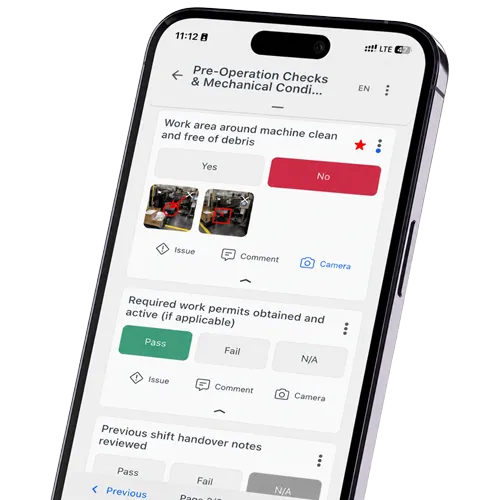
It gives operators the clean, inspect, lubricate and standard-setting steps with a place to flag abnormalities, so
basic care actually happens each shift. Download the checklist (PDF). You can also complete the checklist
digitally in flowdit on your phone, tablet or PC.
Related Terms
- Clean, Inspect, Lubricate (CIL) – the core AM routine.
- Total Productive Maintenance – AM is its first pillar.