Skip to content
 EN
EN  DE
DE  العربية



7 Wastes of Lean: The TIMWOOD List and How It Differs from the 8 Wastes
The 7 wastes of lean group every activity a customer would not pay for into seven categories: transport, inventory, motion, waiting, overproduction, over-processing and defects. Taiichi Ohno set them out at Toyota, where they go by the Japanese word muda. Most Western training decks now count eight.
What are the 7 wastes of lean?
Each one is a way the work burns time or money without changing the product.
- Transport Material moves from A to B and nothing happens to it on the way. Each move costs handling and risks damage.
- Inventory Stock or work in progress sitting above the agreed buffer. It ties up cash and hides the problem underneath.
- Motion The operator walks to the tool crib because the gauge is not where the work is.
- Waiting Idle people, idle machines. A part has not landed, or a sign-off has not come back.
- Overproduction Making more than the next step asked for, or making it too early. Ohno rated this the worst of the seven: it manufactures the other six.
- Over-processing Steps and tolerances the customer never paid for. Typing the same reading into two systems counts.
- Defects Rework and scrap, including anything the next step hands back.
What do TIMWOOD and DOWNTIME stand for?
TIMWOOD is the memory aid for the seven: Transport, Inventory, Motion, Waiting, Overproduction, Over-processing, Defects.
DOWNTIME is the eight-waste version, reordered: Defects, Overproduction, Waiting, Non-utilized talent, Transport, Inventory, Motion, Extra-processing. Same wastes either way. If your deck says DOWNTIME, your organization counts eight.
How do the 7 wastes differ from the 8 wastes?
One item, and it is a big one. The eighth waste is unused human potential: the improvement idea nobody picked up, the skill the roster never uses, the operator who has watched the same fault appear every Tuesday for a year and was never asked about it. Ohno’s original list stopped at seven because he was describing material flow. Western lean and Six Sigma practice added the eighth later, and it is now the version most people are taught.
Keep one more distinction straight. Muda (waste) is one of three problems in lean production, the other two being mura (unevenness) and muri, overburden. Deal with those two and a fair share of the waste goes with them.
Free 7 Wastes Walk Sheet
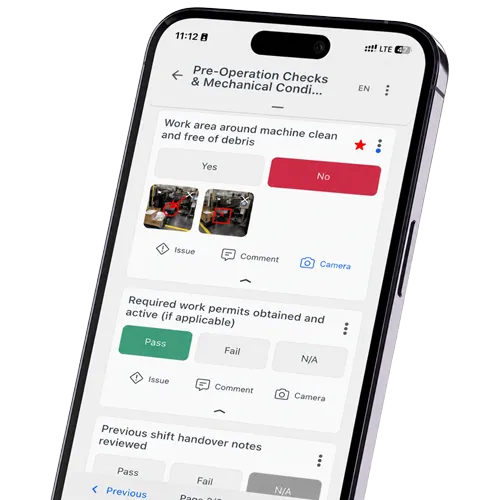
Take it to the line: 17 observation prompts across all eight wastes, plus a log that forces an owner and a due date onto every finding. An AI answer can list the seven wastes. It cannot record what your cell looked like at 09:40 on Tuesday. Download the checklist (PDF). Prefer it digital? Run this on phone, tablet or PC in flowdit.
Related Terms
- Kaizen the small-step routine that actually removes the wastes.
- Just-In-Time (JIT) pulls material to demand instead of building ahead.
- Error-proofing sits behind Poka Yoke, aimed squarely at defects.
- Work In Progress (WIP) is the inventory waste with a number on it.