 Skip to content
 English
  Deutsch
  العربية



-
Maintenance Management Software - Preventive & AI-Powered
Prevent Downtime
with Automated Maintenance
with Automated Maintenance
flowdit helps you automate maintenance tasks, track asset performance, and extend equipment life. Use AI-powered scheduling and preventive tools to reduce unplanned downtime — all in one platform.



Chosen by the Teams That Keep Operations Running







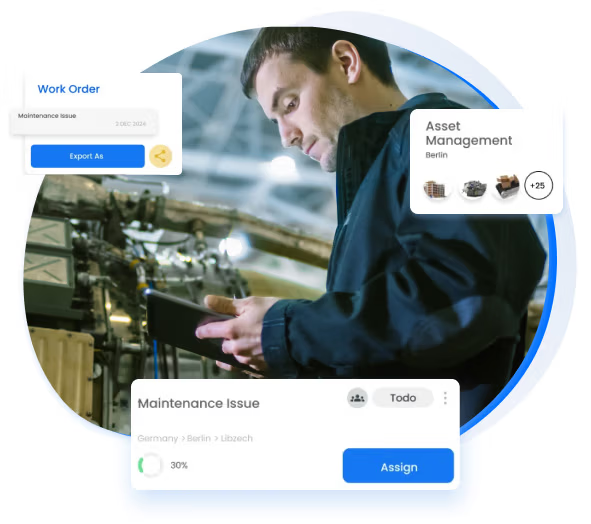
Asset Tracking
Track Your Assets with Ease
Maintain a detailed inventory of all your assets. Monitor performance, service history, and condition in a single centralized platform, ensuring optimal utilization.

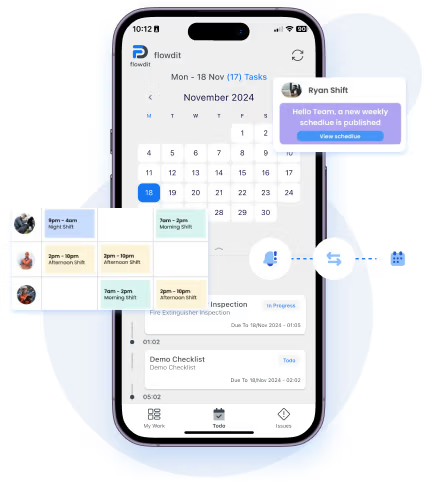
Preventive Care
Shift from Reactive to Proactive Maintenance
Transform your maintenance strategy. Schedule preventive maintenance tasks to extend the lifespan of your assets and minimize downtime.
Work Order Management
Simplify Work Order Creation
Easily create, assign, and manage work orders & work instructions. Track progress and ensure timely completion while enhancing team responsibility.
Mobile Access
Empower Your Maintenance Team
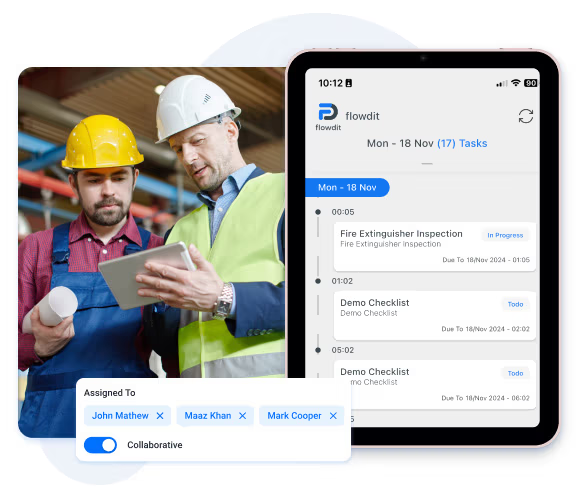
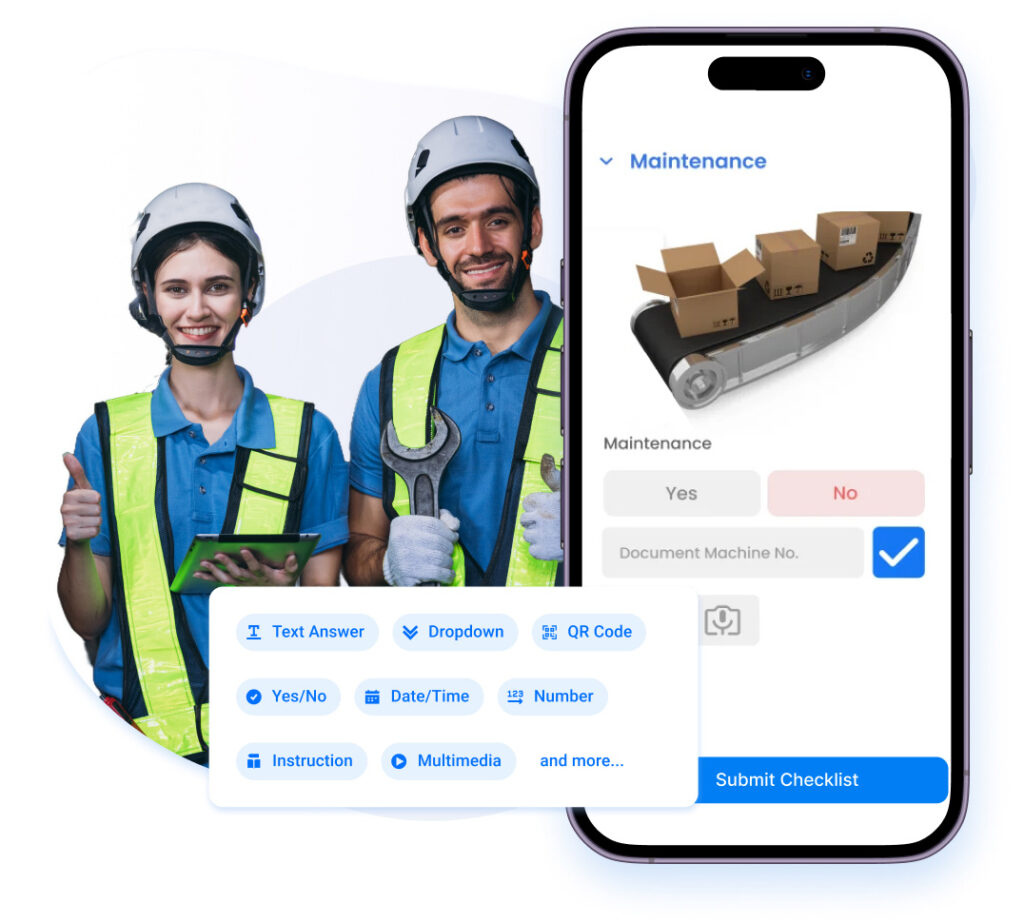
Provide field technicians with mobile access to work orders, maintenance logs, audit workflows and asset details. Enhance productivity with real-time information on-the-go.
Data-Driven Decisions
Generate Insights with Detailed Reports
Access customizable reports to analyze maintenance performance. Identify trends, track costs, and make informed decisions to optimize your maintenance strategy.
Intuitive Design
Navigate with Ease
Enjoy a user-friendly interface that simplifies maintenance management for all users. Get started quickly and reduce training & onboarding time for your team.
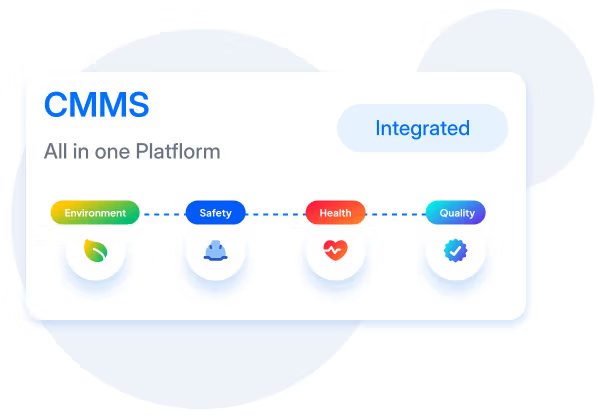
Armed with all the necessary tools
for Maintenance
Maintenance Scheduling
Inspections & Audits
Asset Tracking
Asset Management
Paperless Environment
Predictive Alerts
Work Orders
Preventive Scheduling
Inventory Management
Condition Monitoring
Vendor Management
Mobile Access
Perfect fit for every team
Get started fast with out-of-the-box solutions.
Easily customize flowdit as team needs grow!
CONSTRUCTION
flowdit enhances efficiency, reduces delays, boosts productivity, ensures safety.
Project Manager
Granted Works Contractors
LOGISTICS
flowdit unifies operations, boosts efficiency, and enhances team collaboration.
Operations Manager
Loadtrack Logistics
ENERGY
flowdit streamlines processes, boosts efficiency, and empowers innovation.
Sun Horizon Energy Solutions
AVIATION
flowdit transforms operations, ensuring clarity, adaptability, and team alignment.
Chief Operations Officer
SkyTrack Aviation Services
MANUFACTURING
flowdit enhances efficiency, ensures compliance, simplifies processes, and saves time.
Quality Assurance Manager
IronEdge Fabrications
Integrated Maintenance Solutions for Reliable Operations
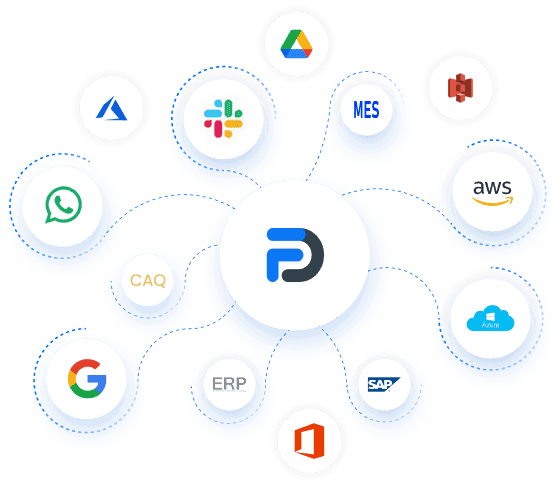
flowdit simplifies your operations by integrating with ERPs and project management tools. Optimize production processes and deliver better outcomes.
Enhancing Operational Efficiency with flowdit’s Maintenance Management Software
Transform the way your team works - today.
Simplify processes, stay aligned with every standard, and drive efficiency with flowdit’s all-in-one platform. Power your operations today.


Got questions?
Frequently Asked Questions
What is maintenance management software?
Maintenance management software is a specialized tool that assists organizations in streamlining and optimizing the maintenance of their assets, such as machinery, equipment, and facilities. It offers a centralized platform for tracking asset performance, scheduling maintenance activities, and ensuring timely inspections and repairs.
As part of a suite of maintenance management solutions, it focuses on maintenance management to address critical operational needs and improve reliability. By focusing on preventive maintenance strategies, the software lowers unplanned downtime and increases the lifespan of important equipment. This software improves operational efficiency by maximizing resource usage and minimizing disruptions. It is widely used in the manufacturing, transportation, and healthcare industries.
Maintenance management software often integrates with asset management software to provide comprehensive oversight of equipment and resources. Work order tracking, inventory control, and automated reminders are just a few of the CMMS capabilities that help teams remain proactive and well-organized when it comes to asset maintenance.
What features should I look for in a CMMS or maintenance software?
There are a few important things to think about when choosing maintenance management software. Firstly, look for essential features that streamline maintenance processes.
These may include work order management, preventive maintenance scheduling, asset tracking, inventory management, and robust reporting capabilities. Make sure the software supports maintenance tracking to monitor all activities effectively and has strong features to provide a clear overview of all activities while facilitating data-driven decision-making.
It should also operate as a versatile asset management platform , enabling seamless integration of asset data into your workflows to improve utilization and extend asset lifecycles. Furthermore, the system should record asset maintenance histories to aid in better long-term planning and decision-making.
How important is the ease of use when selecting maintenance software?
Ease of use is a critical factor to consider when evaluating maintenance management software. Opt for software with an intuitive interface, enabling your staff to navigate and using its features efficiently while improving maintenance operations.
Look for solutions that simplify maintenance tasks while supporting effective asset operations management platform capabilities. This entails choosing a system that enables easy data entry, smooth information access, and optimized workflows, such as creating maintenance work orders or managing recurring maintenance without requiring extensive training.
Can the CMMS integrate with other software systems we use?
Yes, integration capabilities are essential.
Select a CMMS that can effortlessly link with your current ERP, accounting, or inventory systems.
These integrations enable you to track asset maintenance in real-time and provide a consolidated view of your operations. Furthermore, connecting with tools like asset and inventory management software improves process efficiency and ensures that all systems function together seamlessly. A digital maintenance management system further enhances workflows by resolving maintenance issues proactively and efficiently.
Opt for software that adjusts to your operating requirements and increases overall system compatibility and functionality.
Is it necessary for the CMMS to be scalable?
Absolutely, scalability is a crucial factor when selecting maintenance work order software for your organization.
The software should be able to accommodate expansion by supporting more users, assets, and schedules. A scalable software solution ensures that the system remains strong and enables preventative maintenance even as your organization's complexity grows.
Opt for a system that improves maintenance management processes , enabling your team to remain organized effective during times of expansion. Check if the software enables for easy customization and integration to meet the unique demands of your evolving business.
What kind of vendor support and training should I expect with a CMMS?
When searching for vendors, prioritize those that offer comprehensive support services.
These should encompass technical assistance, regular software updates, and technical assistance. A vendor that offers access to a free version or a Free Maintenance Management Software option guarantees that you can assess its capabilities prior to its complete implementation.
Strong support and accessible maintenance planning resources maximize the value of your investment while facilitating the automation of operations such as preventative maintenance and work order generation.
A well-structured maintenance strategy enhances these benefits by aligning maintenance planning with long-term operational objectives, minimizing downtime, and optimizing resource distribution.
Choose CMMS solutions that serve as versatile management tools, enabling effective asset management. Additionally, make sure the management software has seamless integration features to streamline business processes and increase productivity.
What are the benefits of using CMMS software?
Centralized Information: A single source of truth enables clear communication, reduces errors, and provides maintenance teams with correct, up-to-date information, making it the foundation of every effective maintenance platform.
Proactive Maintenance: By automating preventive schedules and providing predictive maintenance via condition monitoring, it reduces downtime and repair costs. These features are required for a strong preventive maintenance program that ensures long-term asset performance.
Streamlined Work Orders: Automated work order management reduces manual errors and accelerates task completion, improving workflow efficiency. This simple maintenance approach saves time while ensuring tasks are completed accurately.
Inventory Automation: Real-time tracking and automated reordering ensure spare parts are available, avoiding costly delays. With CMMS maintenance tools, inventory management becomes an integrated part of the overall maintenance strategy.
Data-Driven Decisions: Dashboards and analytics provide actionable insights into performance, expenses, enabling better planning. These insights enable businesses to fine-tune their corporate asset management procedures, optimizing assets and resources.
Simplified Compliance: Digitized records facilitate audits and ensure adherence to safety standards through centralized, readily accessible data. This is a critical feature of any reliable maintenance platform, as it helps firms avoid compliance concerns.
Improved Safety: By supporting regulatory compliance and safety protocols, it fosters a safer, more dependable work environment that protects both personnel and assets.
How can CMMS software help to ensure compliance and safety standards?
CMMS software promotes compliance and safety by tracking and recording maintenance requests, ensuring that jobs are executed on schedule. It identifies possible safety concerns and tracks corrective actions, resulting in a safer working environment.
By using key features of the CMMS, organizations can simplify their work processes and gain better control over their operations.
Maintenance workers can also benefit from tools simplify task allocation and improve communication within teams. Features like dashboard views provide instant oversight of critical compliance metrics, making it easier to run a strong maintenance program.
Who Uses Maintenance Management Software?
The software is commonly used by professionals in roles such as:
Maintenance Supervisors: Review and validate SOPs or audit findings to align with best maintenance practices. Oversee PM schedules and asset mobility.
Machine Operators: Inspect machinery for wear and tear, report issues through work requests, and rely on precision tools like image recognition for complex part installations.
Reliability Engineers: Analyze maintenance data to generate charts and graphs, matching cost limitations with process availability.
Technicians: Identify asset failure codes, complete work orders, and retrieve necessary parts to restore assets as conditions decline.
Executive Leaders: Assess firm performance by comparing production costs to earnings, and set aside funds for strategic activities.
Inventory Managers: Manage inventory data, adjust spare part quantities, and avoid shortages or overstocking in warehouses.
Facility Managers: Check building systems including HVAC and plumbing, schedule inspections, and guarantee operating efficiency.
Health and Safety Officers: Identify workplace hazards, log safety incidents, and ensure adherence to safety regulations. See how audit workflows support safety tracking.
Environmental Compliance Officers: Track environmental impact, document adherence to regulations, and support sustainability initiatives.
Quality Assurance Inspectors: Evaluate asset conditions to meet quality standards and track corrective actions using the software. See more on quality audits.
How can CMMS software help to extend asset lifespan?
By providing a systematic approach to asset maintenance, CMMS software helps to extend equipment life.
It records maintenance schedules, automates preventative maintenance, and monitors maintenance operations, ensuring potential faults are treated before growing into costly problems. Comprehensive maintenance management solutions enable the effective administration of work orders, optimization of processes, and enhancement of operational efficiency.
The type of maintenance management software is designed to assist enterprises in scheduling and monitoring preventative maintenance, hence minimizing the likelihood of unforeseen downtime. It also helps you to trace maintenance history and optimize performance and dependability, resulting in better decision-making and resource allocation.
CMMS software also facilitates preventative and corrective maintenance, ensuring that all areas of asset management are addressed. For firms that use asset management systems, it provides seamless connectivity, ensuring a unified view of operations. The ability to schedule maintenance and observe it in real time improves efficiency and oversight, ensuring proactive management of all assets.
How do I ensure user adoption of a new maintenance management program?
What training is required for staff to effectively use a CMMS solution?
Training for a CMMS (Computerized Maintenance Management System) should cover basic software navigation, work order management, preventive maintenance scheduling, and reporting features. For staff involved in technical aspects, deeper training on asset management, inventory control, and analytics may be necessary. Offering a mix of live webinars, on-demand tutorials, and hands-on practice ensures that employees feel confident. It’s critical to provide ongoing support, especially during the initial adoption phase, to resolve issues quickly and keep the momentum going.