Skip to content
 EN
EN  DE
DE  العربية




Summary: Welcome to the world of maintenance management, where effective asset management practices play a role in safeguarding your investments. This guide will delve into the types and techniques of maintenance management, highlighting its importance in streamlining operations and enhancing productivity. Whether you’re a maintenance manager, a team member or simply curious about the intricacies of maintenance management this resource is designed to provide valuable insights.
What Does Maintenance Management Entail?
Maintenance management involves planning, coordinating, and overseeing all activities related to asset upkeep in an organization. Its goal is to keep assets in peak condition, minimizing disruptions, maximizing reliability, and prolonging their lifespan. Maintenance optimization plays a key role by refining schedules, improving resource allocation, and leveraging data-driven strategies to reduce costs and enhance overall efficiency. Effective maintenance management ensures smooth operations while preventing unnecessary downtime and extending asset longevity.
The Management of Maintenance
Maintenance management comprises a series of interconnected procedures. It commences with identifying maintenance requirements and then proceeds to planning and scheduling maintenance tasks. Carrying out maintenance activities, overseeing asset performance, and analyzing data for enhancement are all components of the maintenance management process.
Aims of Maintenance Management
Maintenance management goals focus on maximizing equipment dependability, minimizing downtime, reducing maintenance expenses, and optimizing maintenance resources. Maintenance managers can contribute to the company’s prosperity by aligning maintenance tasks with objectives.
Advantages of Maintenance Management
Maintenance management provides advantages to businesses. It aids in prolonging the life cycle of assets, enhancing productivity, boosting safety measures, decreasing breakdowns, and enhancing customer satisfaction. Furthermore, it facilitates resource planning and utilization, resulting in cost savings and increased profitability.
Extent of Maintenance Management
Maintenance management covers equipment upkeep, facility preservation, spare parts inventory control, work order administration, maintenance scheduling, and personnel management. It encompasses both corrective maintenance actions to ensure asset performance.
What keeps maintenance operations one step ahead?
Maintenance Management Software enable proactive planning and seamless execution.
What Are the Main Types of Maintenance Strategies?
Different types exist within the realm maintenance serving specific purposes in assuring asset reliability and longevity. Let’s dive into the types of maintenance;
Reactive Maintenance
Reactive Maintenance also referred to as breakdown or run-to-failure maintenance, involves dealing with maintenance problems when equipment breaks down or malfunctions. It is often seen as inefficient because it can result in downtime, emergency repairs, and higher repair expenses.
Preventive Maintenance
Preventive Maintenance is a strategy that focuses on preventing equipment failures by conducting inspections, servicing, and replacing components at set intervals. By following a maintenance schedule, organizations can reduce downtime, prolong the life of assets, and lower the chances of major breakdowns.
Predictive Maintenance
Predictive Maintenance utilizes technologies and data analysis to forecast when equipment failure might occur. By monitoring equipment performance using sensors and analyzing data trends, experts can schedule maintenance tasks when needed. This method helps minimize downtime, optimize maintenance resources, and avoid upkeep activities.
Condition Based Maintenance
Condition-Based Maintenance relies on real-time data and condition monitoring techniques to evaluate equipment health and trigger upkeep based on predefined thresholds. By monitoring factors like vibration, temperature and fluid levels maintenance teams can detect issues early and perform necessary maintenance tasks promptly. Condition-based maintenance is essential for optimizing maintenance efforts and increasing the reliability of assets.
Proactive Maintenance
Proactive Maintenance goes a step further than predictive methods. It focuses on identifying and resolving the root causes of equipment failures to prevent recurring issues. Organizations can enhance equipment reliability and lower maintenance costs over time by analyzing failure patterns, conducting root cause analysis, and implementing corrective actions.
Effective maintenance management involves implementing maintenance procedures and utilizing tools like Computerized Maintenance Management System (CMMS) software. These solutions help maintenance workers schedule and monitor tasks, maintain checklists, and gather information for decision-making.
The Role and Responsibilities of Maintenance Managers
The role of a maintenance manager is pivotal in ensuring maintenance management. Let’s delve into their responsibilities, required skills, and team-building strategies.
Daily Operations in Maintenance Management
A maintenance manager oversees all maintenance activities, develops strategies, creates schedules, manages budgets, ensures safety compliance, coordinates with departments, prioritizes tasks, and provides leadership to the team.
Key Competencies for Maintenance Managers
To succeed in maintenance management, a maintenance manager should have a range of abilities. These include equipment and maintenance procedures expertise, strong organizational and planning skills, good communication skills, problem-solving and decision-making abilities, and leadership qualities to inspire and lead the maintenance team.
Developing High-Performance Maintenance Teams
Creating a motivated maintenance team is crucial for successful maintenance management. This involves hiring technicians, offering training and opportunities for skill enhancement, promoting teamwork and establishing a work environment. A united maintenance team contributes to increased efficiency, downtime and enhanced productivity. The significance of maintenance management cannot be emphasized enough, as it directly influences success. Planned maintenance helps reduce downtime and decreases maintenance expenses. At the same time, high-quality upkeep ensures asset reliability and safety. By embracing modern maintenance management approaches, organizations can streamline operations, minimize risks and boost performance.
Downtime from missed maintenance?
Plan maintenance, track actions, detect failures earlier.
Maintenance Management Software: Benefits and Implementation
Maintenance management software such as Computerized Maintenance Management Systems (CMMS) plays a key role in optimizing maintenance processes. Let’s take a closer look at the benefits of using CMMS software.
CMMS Functionality
CMMS software is created to streamline maintenance management by centralizing all maintenance-related information, automating workflow processes, and offering real-time insights into asset performance.It helps organizations efficiently handle work orders, keep track of maintenance history and relevant industrial plant documentation, schedule preventive maintenance tasks, and produce reports for data-driven decisions.
Benefits of CMMS Software
The adoption of CMMS software comes with advantages for maintenance management. It enhances maintenance planning and scheduling, boosts asset reliability and availability, cuts down on maintenance expenses, optimizes inventory control, ensures compliance with regulations, and enables maintenance approaches. Using CMMS software, maintenance managers and technicians are equipped with the tools to simplify maintenance processes and enhance efficiency.
Implementation of Maintenance Management Systems
The implementation of CMMS software necessitates planning and assessment. This includes outlining maintenance needs, selecting the CMMS solution, transferring existing data, training users effectively, and establishing maintenance workflows. By adopting CMMS systems, organizations can revolutionize their maintenance operations to drive productivity levels up and achieve asset performance.
How Do you Implement Maintenance Best Practices in your Facility?
To achieve maintenance management practices that resonate with their requirements and objectives alike, organizations should follow best practices deemed essential. Let’s delve deeper into some practices in detail.
Developing a Maintenance Strategy
A solid maintenance strategy forms the core of maintenance management. It includes identifying assets, setting maintenance priorities, establishing performance benchmarks, and outlining maintenance approaches for equipment types. A rounded maintenance strategy ensures that maintenance efforts and targeted resources are used efficiently. Organizational objectives are achieved.
Implementing a Preventative Maintenance Program
Preventative Maintenance is a method that aims to prevent equipment failures through inspections, lubrication, adjustments, and component replacements. Organizations can decrease breakdowns and asset lifespan and reduce reactive maintenance tasks by implementing a maintenance program. This approach involves creating maintenance schedules, developing checklists, and monitoring maintenance activities.
Enhancing Work Order Management
Work order management is essential for maintenance operations. It entails generating, prioritizing, assigning work orders, tracking their progress, and documenting completed tasks. By implementing maintenance management software system with a work order management module, organizations can ensure the execution of maintenance tasks, optimal allocation of resources, and smooth communication among team members.
Utilizing Condition-Based Maintenance
Condition-Based Maintenance utilizes real time data to initiate maintenance actions when equipment condition deviates, from predefined parameters. Companies can use sensor monitoring tools and data analysis to enhance maintenance activities, minimize tasks, and reduce downtime. Implementing condition-based maintenance involves establishing monitoring systems that define condition thresholds and integrate data analysis capabilities.
Efficient Management of Spare Parts Inventory
Effectively managing spare parts inventory is crucial for reducing downtime and controlling maintenance expenses. This includes maintaining an inventory database, conducting audits, setting reorder points, and optimizing stock levels. Organizations can streamline maintenance operations and enhance asset reliability by ensuring the availability of parts while avoiding excessive inventory levels.
Prioritizing Training and Skills Development
Investing in training and skills development is vital for the success of maintenance management. Offering training sessions and workshops helps maintenance technicians stay informed about the technologies, best practices and industry standards. By improving their skills and knowledge, technicians can carry out maintenance tasks efficiently, identify issues proactively, and contribute to ongoing improvement initiatives.
Embracing Modern Maintenance Technologies
Advancements have transformed the field of maintenance management. Companies can leverage technologies like the Internet of Things (IoT), Artificial Intelligence (AI), Machine Learning (ML), and data analytics to optimize their maintenance processes. The Internet of Things (IoT) sensors can gather real-time information on equipment’s performance. Artificial Intelligence (AI) and Machine Learning (ML) algorithms can analyze this data to forecast failures, while data analytics can offer valuable decision-making insights. Embracing these technologies allows organizations to move from reacting to issues to proactively maintaining their assets, enhancing asset reliability, and streamlining maintenance procedures.
Setting Up Key Performance Indicators (KPIs)
Key Performance Indicators (KPIs) are metrics that aid in measuring the efficiency and effectiveness of maintenance management. By defining and monitoring KPIs like equipment uptime Mean Time Between Failures (MTBF), Mean Time To Repair (MTTR) and maintenance expenses; organizations can evaluate their maintenance performance, pinpoint areas for enhancement, and make informed decisions based on data. Regularly assessing KPIs empowers maintenance managers to monitor progress and implement measures when needed.
Fostering a Culture of Ongoing Improvement
Improvement stands as a core principle in maintenance management. Cultivating an improvement environment among the maintenance team and the organization leads to better maintenance practices, heightened efficiency, and improved asset performance. This can be accomplished through feedback loops that encourage input from maintenance technicians conducting root cause analyses for failures and implementing actions and preventive measures based on lessons learned.
Creating Strong Communication Channels
Good communication plays a vital role in maintenance management. Establishing clear communication pathways enhances coordination and collaboration among maintenance teams, other departments, and stakeholders. Regular meetings, effective communication tools, and structured maintenance reporting ensure a seamless flow of information, providing transparency on maintenance plans, timelines, and critical tasks. A well-documented reporting system helps track progress, identify recurring issues, and support data-driven decision-making.
What's Next for Your Maintenance Operations?
The gap between reactive firefighting and strategic maintenance management is not bridged by good intentions. It takes the right tools and systematic execution. Start by assessing where your operations lose the most time and money, then implement one focused improvement rather than a full programme.
Start with one improvement, not a programme
Digital checklists for your critical assets, a preventive schedule for the top failure points, or condition monitoring on the expensive equipment. Whichever you pick, flowdit takes the administrative part off the technicians so the time goes into preventing problems instead of recording them.
Book a demo ›20 minutes · bring the asset that costs you the most downtime
FAQ | Maintenance Management
How can I implement good maintenance practices in a small business?
Create a list of all equipment and assets needing maintenance. Set fixed maintenance intervals – daily, weekly, monthly, yearly as needed. Document all work, costs, and issues in a simple system (spreadsheet or software).
Train employees in basic maintenance and problem detection. Budget for routine maintenance and emergencies. Handle small tasks in-house, hire professionals for complex repairs.
Most important: Act preventively rather than reactively; fixing small problems early saves money and prevents breakdowns.
In which areas is maintenance essential?
Maintenance is crucial across various fields to ensure reliability, safety, and efficiency. Key areas include:
- Facilities Maintenance – Upkeeping buildings, HVAC systems, and infrastructure.
- Equipment Maintenance – Servicing machinery to prevent breakdowns.
- Vehicle Maintenance – Ensuring the safety and performance of transportation fleets.
- IT Maintenance – Managing hardware and software for system reliability.
How does a CMMS reduce downtime and boost efficiency?
A CMMS (Computerized Maintenance Management System) centralizes and automates your maintenance operations in one platform.
It organizes tasks, schedules work orders, tracks inventory, and maintains equipment history while enabling seamless communication among technicians, supervisors, and management.
Key benefits: Automated scheduling improves planning, real-time data optimizes resources, historical insights enhance asset performance, and reports support strategic decisions. You shift from reacting to breakdowns to predicting maintenance needs: reducing downtime, extending equipment lifespan.
Which modern technologies transform maintenance performance?
Modern technologies such as Internet of Things(IoT), Artificial Intelligence(AI), Machine Learning (ML), and data analytics have transformed maintenance management. IoT sensors collect real-time equipment data, while AI and ML analyze it to predict failures and optimize schedules.
Industrial maintenance benefits from these advancements by enabling predictive strategies that prevent costly breakdowns.
How important is safety in maintenance management?
Safety is a critical aspect of maintenance management, as tasks often involve working with heavy machinery, electrical systems, and hazardous materials. Regular maintenance inspections are essential to identify potential risks, ensure equipment is in safe working condition, and prevent failures that could lead to accidents. A strong safety culture, reinforced by clear protocols, proper use of personal protective equipment (PPE), and thorough risk assessments, minimizes hazards. Additionally, structured safety training, hazard identification, and incident reporting further enhance workplace safety, protecting maintenance personnel and ensuring compliance with safety standards.
How do maintenance KPIs drive measurable business results?
Key metrics like equipment uptime, mean time between failures (MTBF), mean time to repair (MTTR), and maintenance costs reveal how effectively your operations perform. These indicators help you identify inefficiencies, track progress toward goals, and make data-driven decisions to optimize resources.
What is audit maintenance and how does it ensure quality?
Audit maintenance systematically reviews your maintenance processes, equipment, and documentation to ensure compliance, safety, and operational standards are met.
Regular maintenance audits identify safety hazards, regulatory gaps, and inefficiencies before they escalate into critical issues. They improve accountability, reduce downtime by catching problems early, and ensure procedures are followed correctly. These audits also provide data-driven insights for continuous improvement and demonstrate compliance to regulators, helping you avoid penalties.
What are the benefits of digital checklists in maintenance?
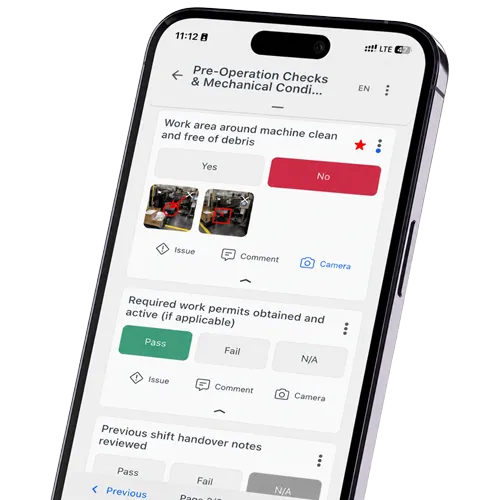
Paper checklists get skipped, lost, or filled out dishonestly because there’s no accountability. Digital versions force completion before moving forward, timestamp every entry, and flag missed steps immediately. Technicians can attach photos of problems directly to tasks instead of writing vague notes nobody understands later. Compliance documentation happens automatically instead of someone spending hours filing paperwork.
What's the difference between preventive and predictive maintenance?
Preventive maintenance follows fixed schedules: change oil every 3 months regardless of condition. Predictive maintenance monitors actual equipment condition through sensors or analysis to intervene only when data shows degradation starting. Preventive is cheaper to implement but performs unnecessary work and misses failures between intervals, while predictive cuts costs by 25-30% but requires upfront sensor investment. Most facilities run hybrid approaches: preventive for simple assets, predictive for critical expensive equipment.
What is total productive maintenance (TPM) and how to implement it?
TPM shifts basic maintenance tasks to operators (daily inspections, cleaning, lubrication) so technicians handle complex work only. Implementation starts with one production line where operators receive focused training on their specific equipment, not generic courses. Visual management tools show exactly what to check and when, making it impossible to forget steps. The hardest part isn’t training but changing the culture where maintenance “owns” equipment; expect 12-18 months before behaviors stick.
How do maintenance audits improve compliance and safety?
Audits catch paperwork gaps before regulators do: missing lockout/tagout logs or expired certifications that trigger fines. The audit process itself forces standardization when you document procedures and discover ten technicians doing the same task ten different ways. Regular internal audits create a trail proving due diligence if incidents occur, which matters in legal and insurance contexts. Most facilities audit critical systems quarterly and everything else annually, adjusting frequency based on risk.
How do I build a proactive maintenance culture in my organization?
- Establish feedback channels: Regular team meetings, digital systems, or improvement boards where technicians share frontline insights
- Implement structured problem-solving: Conduct root cause analysis after failures, document lessons learned, apply corrective actions systematically
- Review regularly: Refine processes based on performance data and team feedback
- Invest in training: Develop skills so technicians become proactive problem-solvers, not reactive firefighters
- Recognize publicly: Celebrate implemented suggestions and measured results to boost participation
Image credits
© VIEWFOTO STUDIO - Adobe Stock