Skip to content
 EN
EN  DE
DE  العربية



Dynamic Risk Assessment (DRA): What it is and How it Differs from a Static One
A dynamic risk assessment, or DRA, is the on-the-spot judgment a worker makes as a situation changes: reassessing the hazards in front of them and adjusting before they carry on. A static risk assessment is written in advance for a known task. The static one plans for what you expect; the dynamic one handles what you don’t.
Why does a dynamic risk assessment matter?
A dynamic risk assessment matters because real work rarely follows the plan written on paper. Conditions change, and a pre-written assessment can miss a hazard that appears mid-task, so giving workers a way to reassess on the spot prevents incidents the static plan never saw coming. It is a core part of everyday work safety, especially for lone and field workers who face changing conditions with no supervisor nearby.
When is a dynamic risk assessment used?
It fills the gap a pre-written assessment can’t:
- When conditions change mid-task, weather, a leak, a new hazard.
- In non-routine or emergency work with no fixed script.
- For lone or field workers who face unexpected conditions.
- Whenever the written assessment no longer matches reality.
How does it differ from a static risk assessment?
Planned versus in-the-moment. A static risk assessment is done in advance for a known task, part of
the safety management system. A DRA happens live, when the worker sees the situation has changed and re-judges the risk on the spot. Static covers the expected; dynamic covers the surprise. Both sit under everyday work safety.
Dynamic vs static risk assessment at a glance
In the moment versus planned ahead.
| Aspect | Dynamic (DRA) | Static |
|---|---|---|
| When | Live, as it changes | In advance |
| For | Non-routine, changing work | Known, routine tasks |
| By | The worker on the spot | A planner |
| Covers | The unexpected | The expected |
Free Dynamic Risk Assessment Sheet
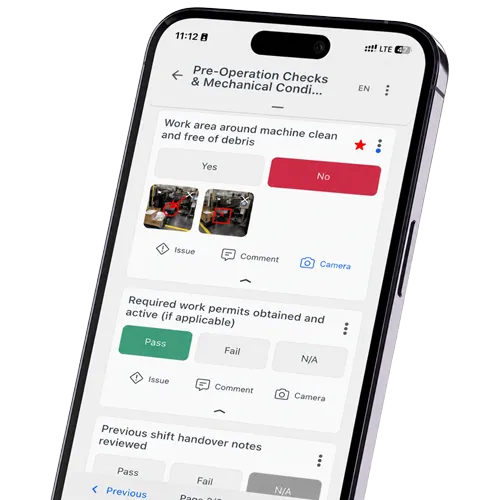
It gives workers a quick on-the-spot frame – hazards now, who’s at risk, the control, safe to proceed ; so a changing situation gets reassessed instead of ignored. Download the checklist (PDF). You can also complete the checklist digitally in flowdit on your phone, tablet or PC.
Related Terms
Further Reading
- EHS-Software – digital safety & incidents
- Steps in Operational Risk Management
- Types of Key Risk Indicators