Skip to content
 English
  Deutsch
  العربية



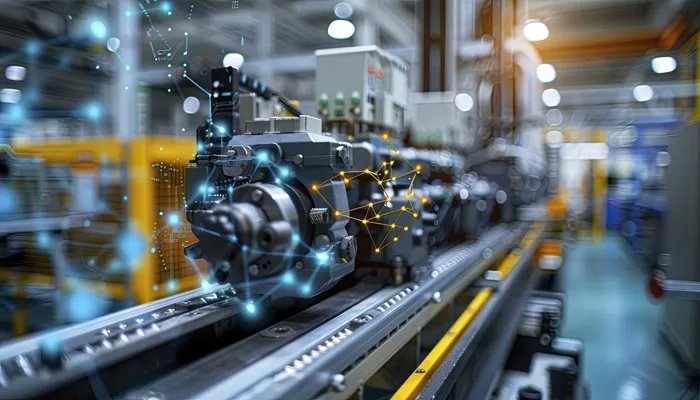
Summary: Every modern production line runs on information. Sensors are the silent observers capturing everything from temperature shifts to machine vibrations. Together, they form the nervous system of connected factories: an environment where every motion, sound, and variable can be measured, interpreted, and acted upon. The rise of IoT sensor data has changed how decisions are made. Instead of reacting to problems, manufacturers now anticipate them. Machines tell their own stories through streams of time-stamped data that reflect not just what happened but why it happened. This transformation from intuition-driven to data-driven operations is the foundation of every smart factory initiative. As automation grows, so does the need to manage these endless flows of sensor information. The challenge isn’t only about collecting data, but making sense of it; turning noise into clarity and raw signals into insight.
What Are the Core Components of the IoT Sensor Data System?
Understanding the scope of the IoT sensor data ecosystem is the first step toward structuring it effectively. At its core, the system consists of a network of sensors that collect real-time data from machines, equipment, and environments within manufacturing operations.
These sensors capture information such as temperature, pressure, humidity, vibration, and other critical operational variables that reflect the actual state of production processes.
What differentiates IoT sensors from traditional sensing technologies is not only their ability to collect data, but also their capability to transmit it continuously to other systems in real time. This uninterrupted data flow provides a reliable foundation for informed decision-making, automation, and process control.
Key Components of the Ecosystem
-
IoT Sensors: The foundational elements used to measure machine condition, environmental parameters, and product-related characteristics directly at the source.
-
Connectivity: Communication layers that transmit sensor data via networks such as Wi-Fi, Bluetooth, or industrial protocols like MQTT, ensuring reliable data transfer.
-
Data Aggregation: Collected sensor data is consolidated, typically in centralized systems or cloud environments, where it becomes accessible for further processing.
-
Advanced Analytics and AI: Analytical models and algorithms process aggregated data to generate insights that support performance optimization, downtime reduction, and quality improvement.
Are you missing key insights from your IoT sensor data?
Get the insights you need to reduce downtime with flowdit. Learn more: flowdit IoT Monitoring System
How Do IoT Sensors Work?
The primary function of IoT sensors is to collect and transmit data. The overall process can be broken down into a few fundamental steps.
-
Data Collection: IoT sensors are installed in machines and equipment to continuously monitor critical parameters such as temperature, pressure, vibration, or motion. Data is captured at defined intervals, providing a real-time view of operating conditions.
-
Data Transmission: Once collected, sensor data is transmitted wirelessly to a central system or cloud-based platform. Depending on the setup, this transmission occurs in real time or near real time, allowing rapid access to current information.
-
Data Processing: After reaching its destination, the data is processed by software systems. Analytical models and AI-based algorithms can identify patterns, trends, or anomalies and derive predictive insights from the raw sensor data.
-
Actionable Insights: Processed data is transformed into insights that support concrete actions. These insights may trigger automated responses such as maintenance alerts or provide operators with data-driven recommendations to improve performance.
The Interplay Between IoT Sensors and AI Technologies
While collecting IoT sensor data is a crucial first step, AI in manufacturing turns raw data into meaningful, actionable insights. By analyzing sensor data and identifying patterns, AI systems can predict failures, optimize performance, and support informed decision-making.
The combination of IoT sensors and AI enables a shift from reactive management to predictive control, allowing potential issues to be identified and addressed before they escalate.
Predictive Maintenance
Artificial intelligence can forecast equipment failures by analyzing historical and real-time sensor data. This predictive capability enables timely maintenance interventions, reduces unplanned downtime, and extends the service life of assets.
Quality Control
AI-driven systems monitor production processes in real time to ensure products remain within defined specifications. Through continuous analysis of sensor data, defects can be detected early, minimizing rework and improving overall product quality.
Anomaly Detection
AI models are particularly effective at identifying anomalies. For example, a sudden increase in vibration levels may indicate an emerging failure. AI systems can detect such deviations in real time and enable prompt intervention.
➡️ The relationship between IoT and AI is symbiotic. Sensors supply data to AI models, which generate insights that inform decisions. The result is a closed feedback loop that continuously improves over time.
Types of Data Collected by Sensors and Their Relevance
The data gathered by IoT sensors can be grouped into several distinct categories, each serving a specific role in production and operations.
Operational Data: Metrics such as machine speed, torque, and energy consumption provide direct insights into equipment performance and operational efficiency.
Environmental Data: Parameters including temperature, humidity, and air quality help ensure that surrounding conditions remain within acceptable ranges for stable production.
Quality Control Data: Inspection and measurement sensors capture product-related data, enabling early detection of deviations and process issues.
Predictive Data: Historical and real-time sensor data used to anticipate machine failures or maintenance needs before disruptions occur.
➤ Each data type fulfills a clear purpose. Combined, they create the foundation for continuous improvement, predictive maintenance, and systematic process optimization.
Challenges Faced by Manufacturers in Data Management
Collecting sensor data is straightforward. Managing it effectively is far more complex. Facilities operating hundreds of connected devices can generate massive data volumes every month, quickly increasing system complexity.
Legacy infrastructures often lack compatibility with modern IoT architectures, resulting in data silos. Network instability and inconsistent data standards further complicate integration. Even when data collection works as intended, extracting relevant insights remains difficult. Without a structured data management approach, valuable information can disappear within vast amounts of raw data.
Opportunities for Manufacturers
The potential of IoT sensor data extends well beyond monitoring or maintenance use cases.
✅ Process optimization: Continuous feedback enables fine-tuning of production parameters to improve efficiency and stability.
✅ Product quality: Real-time monitoring supports early detection of deviations, reducing rework, scrap, and material waste.
✅ Energy management: Sensor insights reveal inefficiencies in power consumption and highlight concrete reduction opportunities.
✅ Customer satisfaction: Data-driven consistency improves reliability and strengthens long-term trust in products and processes.
➤ By integrating sensor insights into daily operations, manufacturers can move from reactive responses to predictive control and turn data into a sustainable competitive advantage.
5 Proven Steps to Elevate Your IoT Data Management
To make the most of IoT data, manufacturers need a clear strategy for managing it. Here are some strategies that can help:
-
Implement Robust Data Governance: Establish clear policies for data collection, validation, storage, and retention. Guarantee that all data is auditable and traceable.
-
Utilize Advanced Analytics and AI: By employing machine learning and predictive analytics, manufacturers can uncover hidden patterns, optimize production schedules, and predict maintenance needs before they occur.
-
Invest in Scalable Infrastructure: As the number of connected devices grows, manufacturers must ensure that their data management infrastructure can scale accordingly without sacrificing performance or security.
-
Ensure Security: Protect data from cyber threats with strong encryption and secure communication protocols. Routine audits and vulnerability evaluations are essential.
-
Promote Training and Adoption: Employees must receive training to utilize tools and technologies proficiently, ensuring that data-driven decisions are founded on precise, actionable insights.
Emerging Trends in IoT Sensor Technologies
Advancements in sensor technology continue at an extraordinary rate. Several trends are emerging that will change how manufacturers collect, analyze, and use sensor data:
-
Miniaturization: IoT sensors are becoming smaller and more energy-efficient, enabling their integration into a broader array of devices without compromising functionality.
-
Self-Calibrating Sensors: New sensor technologies are being developed that automatically adjust their readings over time, thereby decreasing maintenance expenses and enhancing reliability.
-
Wireless Power: Advances in wireless power transmission mean that sensors no longer need batteries or wired connections, improving flexibility and ease of deployment.
-
Edge AI: Moving more data processing to the edge, closer to the sensor, reduces latency and enhances decision-making speed.
-
Enhanced Security: As cyber threats evolve, sensor technologies are incorporating more robust security measures to ensure that data remains safe and reliable.
These developments will make data collection smarter, faster, and more secure in the years to come.
Conclusion: A Smarter Path Forward
Industries are more interconnected than ever. IoT sensors generate the data that powers smarter decisions, predictive actions, and efficient operations. However, the true transformation happens not during data collection, but in its understanding and application. A well-structured IoT data ecosystem turns factories into living systems: adaptive, transparent, and intelligent.
Facing challenges with data overload and slow response times from disconnected systems? Managing large volumes of sensor data often leads to slow decision-making and missed opportunities. flowdit’s IoT Monitoring System helps you capture, visualize, and analyze sensor data in real time, transforming raw data into meaningful insights and bridging the gap between machines and decisions.
Book a free consultation today.
FAQ | IoT Sensor Data
What is IoT sensor data?
IoT sensor data refers to information created by interconnected devices that monitor physical conditions such as temperature, pressure, and humidity. These sensors collect real-time data and send it via networks to central systems for analysis and decision-making. The data serves as a critical input for improving processes, optimizing performance, and maintaining operational efficiency.
How does an IoT sensor differ from a traditional sensor?
Unlike traditional sensors, IoT sensors connect to the internet or local networks, enabling remote monitoring and real-time data transmission. They are typically more compact, more energy-efficient, and capable of integrating with cloud-based systems for data storage and analysis. This networked capability enables more flexible, automated, and intelligent decision-making.
What are the most common types of IoT sensors used in industry?
Temperature, humidity, pressure, proximity, and motion sensors are among the most used IoT sensors in industry. These sensors are used in prodcution to monitor machine health, track product quality, manage energy consumption, and improve safety. Additional sensors, such as vibration and acoustic sensors, help predict equipment breakdowns and improve operating reliability.
How is IoT sensor data processed in real-time?
The data from IoT sensors is processed in real time by streaming it to cloud-based or local processing systems, where algorithms filter, analyze, and visualize the information instantly. Edge computing technologies facilitate the processing of data in close proximity to the source, thereby reducing latency and facilitating rapid decision-making. This real-time analysis supports timely actions like alerts or system adjustments.
How do IoT sensors contribute to predictive maintenance?
IoT sensors continuously monitor equipment conditions, collecting data on vibrations, temperature, and other performance indicators. Organizations can predict potential malfunctions before they occur by analyzing these data streams with machine learning algorithms. This enables them to take timely maintenance interventions, which reduce downtime and extend the life of equipment.
How can AI and machine learning be applied to IoT sensor data?
The analysis of IoT sensor data by AI and machine learning can be used to predict outcomes, identify patterns, and automate decision-making. AI can detect anomalies, forecast equipment failures, or optimize energy consumption by utilizing algorithms to process vast amounts of real-time data. This enables smarter, data-driven decisions in sectors such as logistics, healthcare, and manufacturing.
How can compliance with data protection regulations be ensured in IoT systems?
By encrypting sensitive data, obtaining explicit user consent, and ensuring appropriate data handling practices, compliance with data protection regulations, such as GDPR, can be guaranteed. IoT systems should implement data retention policies and allow users to control their data. Regular audits, as well as integration with compliance frameworks, help ensure ongoing regulatory adherence in the use of IoT technologies.
How can IoT sensor data be integrated with existing IT systems?
IoT sensor data can be integrated with existing IT systems through APIs, middleware platforms, or IoT gateways that enable seamless data flow. Integration makes it possible to process IoT data in conjunction with other enterprise systems, such as asset management tools, CRMs, or ERPs.This enables comprehensive insights and supports workflows like predictive maintenance or supply chain optimization, leveraging sensor networks effectively.
What are the security risks associated with IoT sensor data?
The main security risks include unauthorized data access, data breaches, and vulnerabilities in IoT devices that can be exploited for cyberattacks. As IoT sensors often transmit data wirelessly, the interception of communication is another risk associated with the internet of things. Additionally, inadequate authentication or encryption measures can expose sensitive information, making IoT systems attractive targets for attackers in sensor networks.
How can IoT sensor data contribute to sustainability efforts?
IoT sensor data helps organizations monitor environmental parameters such as energy use, water consumption, and waste generation. This real-time visibility allows for targeted actions to reduce waste, optimize resource use, and track sustainability metrics. By enabling more efficient management of resources, IoT data plays a pivotal role in achieving sustainability goals and reducing the environmental impact.
Image: Adobe Stock – Copyright: © Manyapha – stock.adobe.com