
Vehicle Hop-Up Checklist
Use this template with flowdit
- Customize this template or build your own
- Complete inspections using the mobile app
- Get reports and analyze your data
Start inspecting smarter — free for one user.


Follow the points below to utilize this vehicle hop-up inspection checklist:
- Confirm that a hop-up or ladder is stored in the vehicle.
- Record the total quantity of hop-ups or ladders present.
- Note the equipment identification details, including type, make, and model.
- Rate the overall condition of the equipment on a scale of 1 to 10.
- Assess the current condition status as usable, unusable, or needs repair.
- Verify that the scaff tag is current and up to date.
- Note any visible defects, damage, or safety concerns observed on the equipment.
- Sign and date the inspection form to complete the record.
Start inspecting smarter — free for one user.
What is a Vehicle Hop-Up Inspection?
Why Vehicle Hop-Up Inspections Matter
What to Include in a Vehicle Hop-Up Inspection Checklist
A comprehensive vehicle hop-up inspection checklist should include the following key components: Equipment presence and quantity – confirm that a hop-up or ladder is stored in the vehicle and record how many are present. Identification details – note the type, make, and model of each piece of equipment. Condition rating – rate the overall condition on a scale of 1 (poor) to 10 (excellent). Condition status – assess whether the equipment is usable, unusable, or needs repair. Scaff tag currency – verify that the inspection tag is current and up to date. Defects and safety concerns – note any visible defects, damage, or safety issues. Including these items ensures a thorough inspection that covers all critical aspects of equipment safety.
How to Use a Vehicle Hop-Up Inspection Checklist
To use the vehicle hop-up inspection checklist, follow these steps: Before starting work, locate the hop-up or ladder in the vehicle. Record the quantity of hop-ups or ladders present. Note identification details such as type, make, and model. Assess condition by rating the overall condition on a scale of 1 to 10 and selecting the appropriate condition status (usable, unusable, or needs repair). Check the scaff tag to ensure it is current and up to date. Inspect for defects – look for any visible damage, wear, or safety concerns. Document your findings by signing and dating the inspection form. Use the checklist consistently before each use of the equipment or at the start of each shift. This routine helps maintain a high standard of safety and compliance.
Common Mistakes and Best Practices
Common mistakes during vehicle hop-up inspections include: Forgetting to check the scaff tag – the tag indicates the last inspection date and is critical for compliance. Not recording defects – even minor damage should be documented for tracking. Using equipment without inspection – always inspect before use. Inconsistent inspections – skipping inspections can lead to missed hazards. Best practices include: Perform inspections before each use – make it a habit. Document everything – use the checklist to create a clear record. Train your crew – ensure everyone knows how to inspect properly. Replace damaged equipment immediately – do not use equipment that is unusable or needs repair. Keep the checklist accessible – store it in the vehicle for easy use.
Frequently Asked Questions

Still managing operations with paper and Excel?
Digitize inspections, audits, SOPs, and corrective actions.
Book A Personal Demo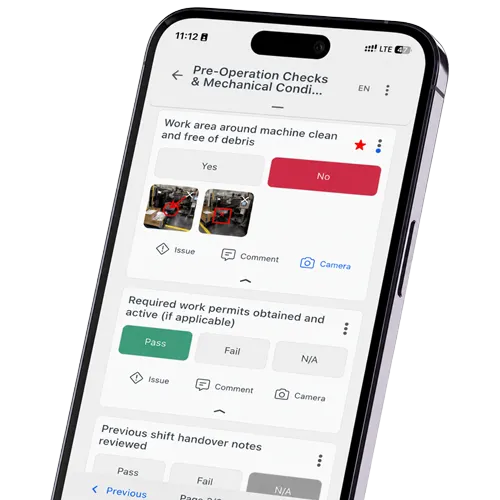
Resources Under The Same Category

Fall Prevention Program Checklist
Use this fall prevention program checklist to plan programs for older adults in ...
View template →
Field Safety Walk Checklist
Use this field safety walk checklist to rate active construction sites as Safe o...
View template →
OSHA Hand and Power Tools Inspection Checklist
This hand and power tools checklist promotes workplace safety by thoroughly eval...
View template →
Civil Construction Safety Inspection Checklist
This civil construction safety inspection checklist helps improve safety perform...
View template →
Heavy Equipment Daily Inspection Checklist
Use this heavy equipment daily inspection checklist before each shift on excavat...
View template →
Abrasive Wheel Pre-Use Checklist for Grinders
Use this abrasive wheel pre-use checklist to inspect portable grinders and cut-o...
View template →Ready to simplify inspections and get your team moving faster?
Start free today and turn inspections into a clear, consistent digital workflow. Prefer a guided walkthrough? Book a demo and see how flowdit can fit your team.